
Feel like a victim of your own success?
Growth is great, until complexity starts slowing you down.
If you're spending more time managing processes than moving your business forward, you're not alone.
But there is a way forward.
A single, integrated and AI-enhanced platform, built for the Australian and New Zealand mid-market.
It's time for the next phase of your business.
Enterprise Resource Planning (ERP) software helps organisations manage and integrate their core business processes into a single, unified system that can do it all.
Whether you sell products or services, manage clients or building sites, distribute materials or work on the field, you can customise ERP features to suit your business.
The main difference between accounting software and ERP software is that businesses can outgrow accounting software.
Accounting software helps smaller businesses manage basic tax admin and small-scale payroll or inventory. ERP has additional features that can manage complexity and scale as your business grows. Faster and more informed decision-making is supported by more comprehensive data and integrated workflows, providing a competitive edge for fast growing businesses.
ERP software goes beyond the basics to simplify the way you work. Connect growing teams and even manage multiple entities. ERP features are powerful and can be tailored to your unique business. They’re designed to simplify operations, connect worksites, and unlock growth potential.


ERP software streamlines financial operations by integrating accounting, budgeting, and financial reporting into a single system. It provides real-time visibility into financial performance, ensuring accuracy and compliance with regulatory standards. This helps businesses make informed financial decisions and manage cash flow effectively.
ERP software optimizes inventory levels by providing real-time tracking of stock across multiple locations. It helps businesses manage orders, monitor inventory turnover, and reduce carrying costs. With ERP, companies can streamline their supply chain operations and improve inventory accuracy.
ERP software enhances supply chain management by integrating procurement, production, distribution, and logistics into a single system. It provides real-time visibility into the entire supply chain, helping businesses optimize inventory levels, reduce lead times, and improve supplier relationships. With ERP, companies can streamline their supply chain operations, reduce costs, and ensure timely delivery of products.
ERP software streamlines manufacturing processes by managing production planning, scheduling, and quality control. It helps businesses optimize production workflows, reduce waste, and improve product quality. With real-time data on production activities, ERP systems enable manufacturers to respond quickly to changes in demand and maintain efficient operations.
ERP systems automate payroll processes, including salary calculations, tax deductions, and employee payments. They ensure timely and accurate payroll processing, reducing the risk of errors and compliance issues. Additionally, ERP software can manage employee benefits, track attendance, and generate payroll reports.
ERP systems include CRM functionalities that help businesses manage customer interactions, track sales opportunities, and improve customer service. By providing a unified view of customer data, ERP software enhances customer relationships, increases satisfaction, and drives sales growth.
ERP systems support project management by providing tools to plan, execute, and monitor projects effectively. They help track project timelines, budgets, and resources, ensuring projects stay on schedule and within budget. ERP software offers real-time insights into project performance, enabling better decision-making and resource allocation, ultimately leading to successful project outcomes.
ERP systems provide powerful reporting and analytics capabilities, offering real-time insights into business performance. They enable businesses to generate detailed reports, track key performance indicators (KPIs), and analyze data across various functions. With ERP, companies can make data-driven decisions, identify trends, and uncover opportunities for improvement, leading to better strategic planning and overall business growth.
.png?width=2000&height=1254&name=UI_Acumatica_Manufacturing-Dashboard_Light%20(1).png "UI_Acumatica_Manufacturing-Dashboard_Light (1)")
Australia and New Zealand's #1 ERP^
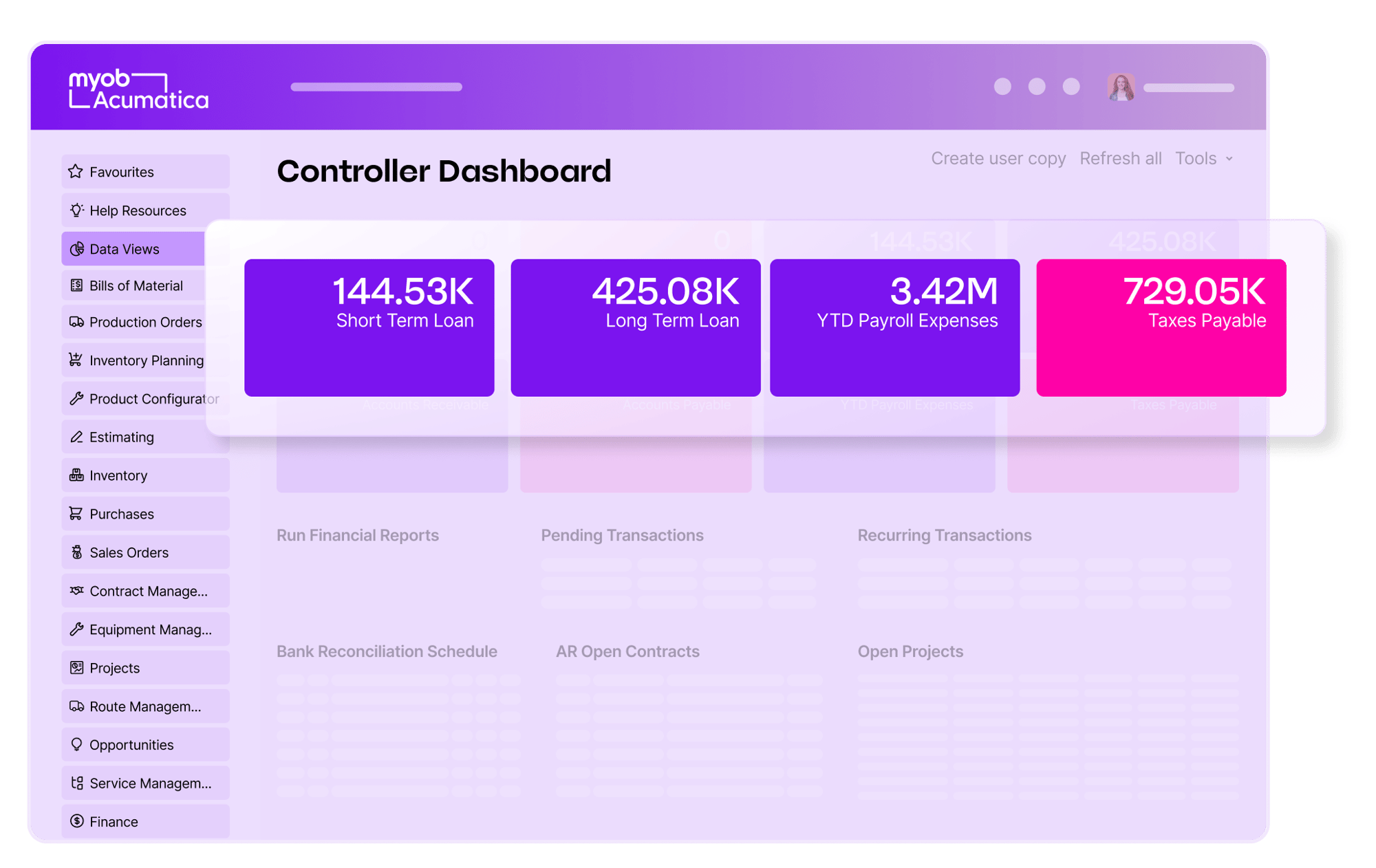
MYOB Acumatica is an all-in-one ERP solution for mid-sized businesses. Connect projects, accounting, payroll, financial management, inventory and more, with a customisable cloud platform.
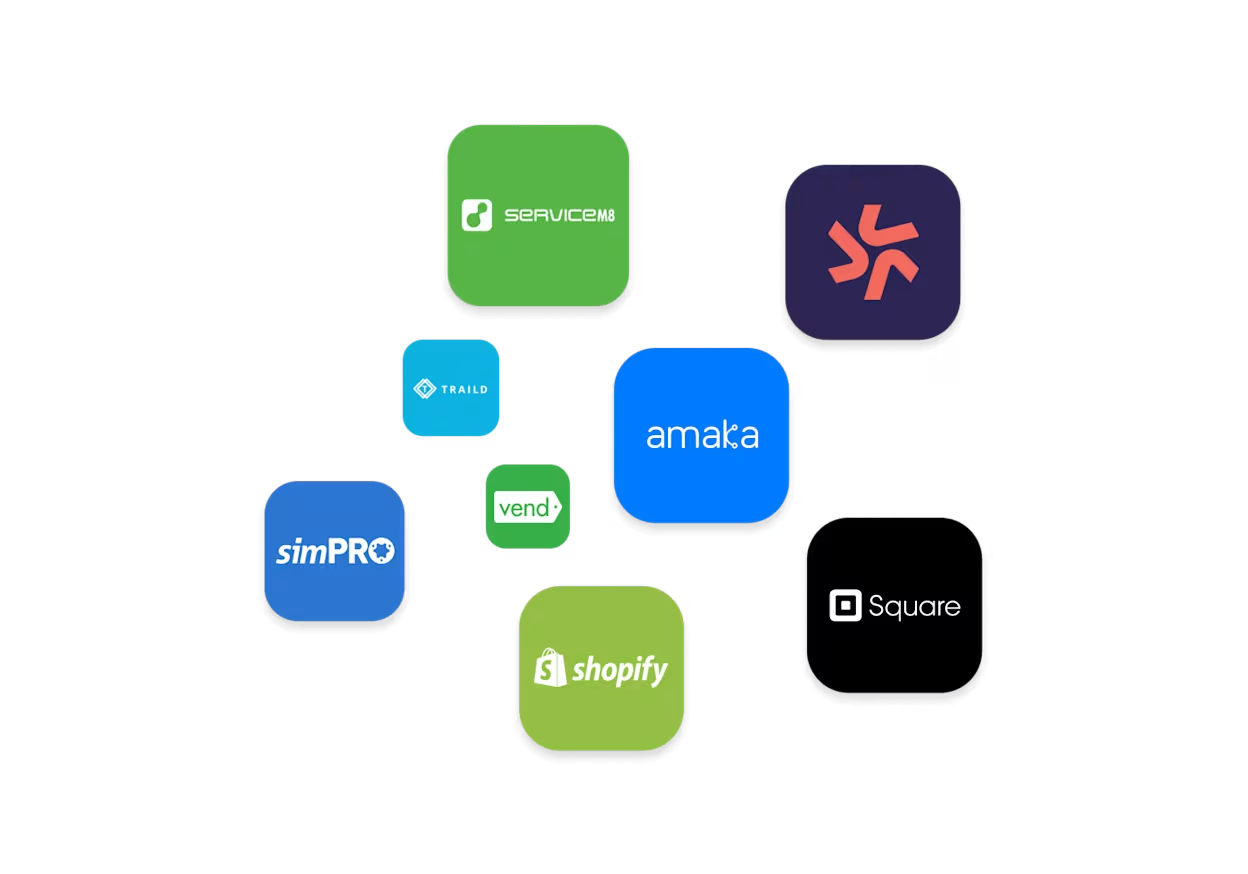
Connect MYOB Acumatica with the tools you already use
MYOB Acumatica integrates with a variety of software providers to meet your unique business requirements. Extend the power of MYOB through our trusted partners and an extensive ecosystem of apps we integrate with.
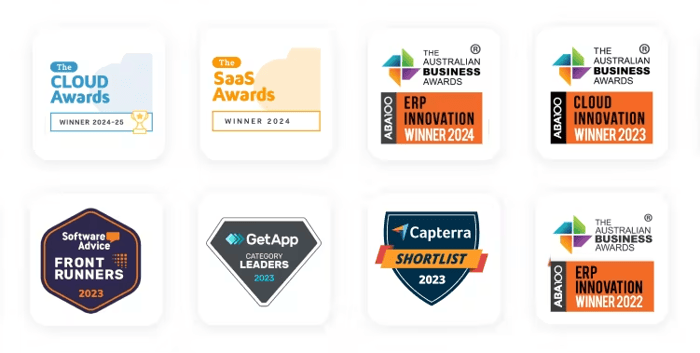
Award-winning platform
When you choose MYOB Acumatica, you’re choosing an ERP technology partner with over 30 years' experience across Australia and New Zealand.
More Australian and New Zealand businesses trust MYOB Acumatica

Signature Hospitality Group
Signature Hospitality Group consolidated 50 separate accounting systems into a single cloud ERP, saving more than 150 hours of finance admin each month and giving leaders instant access to the insights needed to make faster business decisions.

Camex Civil
Camex Civil replaced disconnected systems and manual processes with MYOB Acumatica, gaining real-time visibility across the business, automating key financial tasks, and reducing month-end reporting from months to just seven days.
Synaco by Synergie
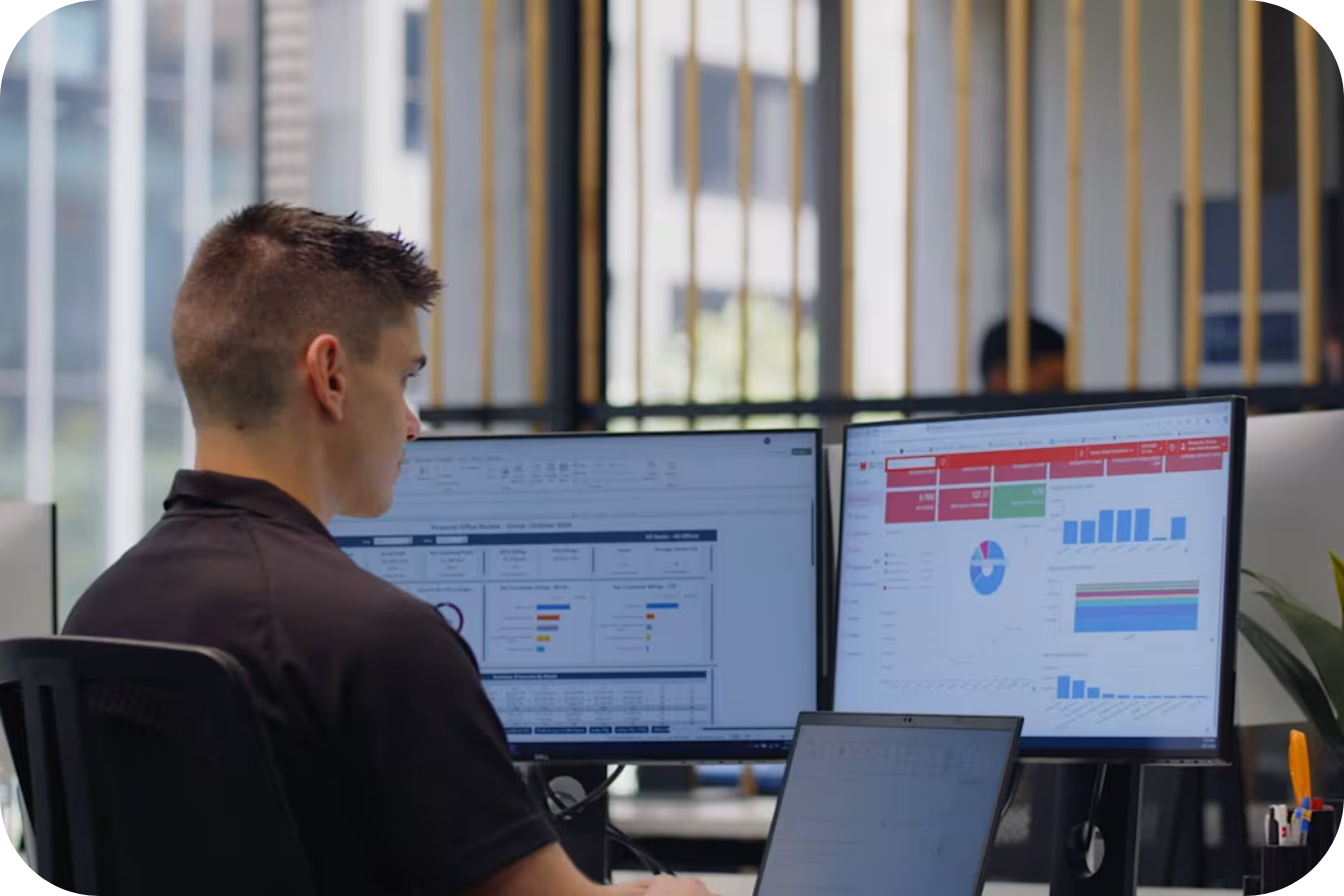
Synaco streamlined payroll, reporting and financial management with MYOB Acumatica, gaining real-time visibility, eliminating manual processes, and building a scalable platform to support rapid growth.
.png)
Watch a demo of the MYOB Acumatica platform, showing capabilities including:
- Financial management
- CRM
- Inventory & order management
- Project accounting
- Real-time reporting & analytics
- AI-powered
Speak to an ERP expert
Fill out the form below to get in contact with us and learn more about how MYOB Acumatica can help you enter the next phase of your business.
We'll learn about your unique situation and demo a solution based on your needs. Please fill in the form and we'll contact you shortly.
What is ERP?
ERP (Enterprise Resource Planning) is a type of software that integrates various business processes into a single system. It helps manage and automate functions such as accounting, inventory, human resources, customer relationship management (CRM), and more, providing a unified view of business operations.
How does ERP benefit a business?
ERP systems offer numerous benefits, including:
- Improved Efficiency: Automates and streamlines business processes, reducing manual work and errors.
- Real-Time Data: Provides real-time insights into business performance, aiding in better decision-making.
- Scalability: Supports business growth by adapting to increased complexity and size.
- Enhanced Collaboration: Facilitates better communication and collaboration across departments.
What are the key features of an ERP system?
Key features of an ERP system typically include:
- Financial Management: Accounting, budgeting, and financial reporting.
- Inventory Management: Real-time tracking of inventory levels and orders.
- Human Resources: Payroll, recruitment, and employee management.
- CRM: Managing customer interactions and sales.
- Supply Chain Management: Procurement, production, and logistics.
- Project Management: Tracking project costs, timelines, and resources.
How do I know if my business needs an ERP system?
Signs that your business might need an ERP system include:
- Disparate Systems: Using multiple, disconnected systems for different functions.
- Manual Processes: Reliance on spreadsheets and manual data entry.
- Growth Challenges: Difficulty managing increased transaction volumes and complexity.
- Data Silos: Inconsistent data across departments, leading to inefficiencies.
What is the difference between on-premise and cloud ERP?
- On-Premise ERP: Installed locally on a company's own servers and managed by their IT staff. It offers more control but requires significant upfront investment and maintenance.
- Cloud ERP: Hosted on the vendor's servers and accessed via the internet. It offers scalability, lower upfront costs, and easier updates, but relies on internet connectivity.
How long does it take to implement an ERP system?
What are the costs associated with ERP implementation?
ERP implementation costs can include:
- Software Licenses: The cost of the ERP software itself.
- Implementation Services: Fees for consulting, customisation, and integration.
- Training: Costs for training employees to use the new system.
- Maintenance and Support: Ongoing costs for system updates and technical support.
Can ERP systems be customised?
Yes, ERP systems can be customised to meet the specific needs of a business. Customisation can include modifying workflows, adding new features, and integrating with other software. However, extensive customisation can increase implementation time and costs.
How does ERP improve data security?
ERP systems enhance data security by centralising data in a single system with robust security measures. Features such as user access controls, encryption, and regular backups help protect sensitive information from unauthorised access and data breaches.
What should I consider when choosing an ERP system?
When choosing an ERP system, consider the following factors:
- Business Needs: Ensure the ERP system meets your specific business requirements.
- Scalability: Choose a system that can grow with your business.
- Ease of Use: Look for an intuitive interface and user-friendly features.
- Vendor Support: Evaluate the vendor's reputation, support services, and track record.
- Total Cost of Ownership: Consider both upfront and ongoing costs, including implementation, training, and maintenance.
How do I get cloud ERP
Fill out the form here to speak to an expert about what MYOB Acumatica could look like in your business. We look forward to speaking with you.
^iStart ERP Buyer's Guide 2025-26, based on upper range of each vendor's declared installed base in the region.